

You don’t have to have it all figured out. You just have to be willing to take the first step.
Why Work With a Male Therapist?
A lot of men aren’t used to talking about what’s going on beneath the surface. They’ve learned how to push through, stay busy, or keep things to themselves, which in many ways is admirable, but at some point it stops working.
You might feel stuck, disconnected, frustrated, or just not like yourself, and not exactly sure why.
For some men, working with a male therapist simply feels more comfortable. Not because it’s better or worse, but just because it can feel easier to open up with someone who they feel gets them.

Who Might Benefit from Working with a Male Therapist?
Men who are hesitant to come to therapy, but feel a little better about it if the therapist is a man
Women who want to understand the men in their lives
Couples where gender dynamics or masculinity are part of your conflict or growth
People exploring how being male (or relating to men) connects to anxiety, past hurts or trauma, shame, power, or the felt lack of power

Therapy for Men
Many men don’t want to “burden” anyone with what they’re dealing with. Then, even if they did come to a place where they wanted to share more openly, they have trouble identifying anyone in their lives, including their wives sometimes, who they feel comfortable sharing with.
Therapy can help bridge that gap by providing a space for you to slow down, open up, and actually understand what’s happening on the inside, so that you can start to feel a little more in control of your life.
Again, you don’t have to come in knowing exactly what to say before you get here, or even fully why you’re coming. That’s all part of the work.
We work together on:
Navigating the pressure you feel to be the perfect husband, perfect father, perfect provider, perfect employee or employer
Naming what’s really happening inside of you (because if you name it, you can tame it)
Understanding anger or shutdown
Navigating work stress and pressure
Breaking patterns of avoidance
Building healthier communication
Processing past hurt or shame
Becoming more present with your partner or family
Building meaningful relationships

Therapy for Women
Some women will also seek out a male therapist when they want:
A different perspective from what they typically experience
Help understanding the internal world of the men in their lives
Help processing past hurt or shame
Help figuring out why it seems that everything they do to try to connect with the men in their lives ends up pushing them away instead

Couples Counseling
Every couple has a cycle. It often doesn’t matter what the surface issue is (money, kids, sex, etc.), the same cycle interrupts what might have started out as a normal conversation and before you know it, one of you is yelling and the other is stomping away. I help couples identify their reactive cycles and slowly over time, learn to interrupt their cycle so that both partners are able to hear one another and be heard. Together we focus on:
Understanding the patterns that keep you stuck
Rebuilding emotional safety and connection
Communicating without escalation
Healing past hurts
Restoring closeness and connection
Whether you’re dating, engaged, or married, couples counseling can help you move toward deeper stability and connection.
Where I’m located
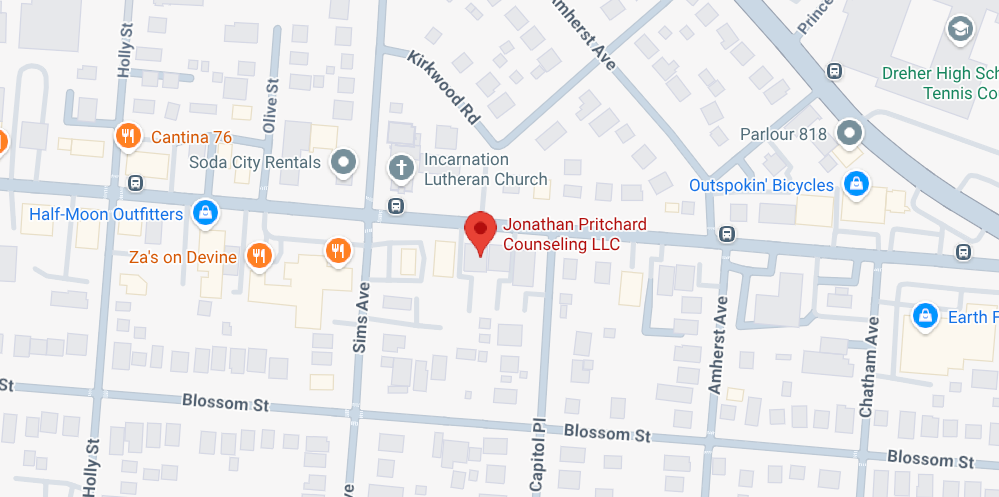
My office is located at 3014 Devine Street, Suite 201, in Columbia, SC, with easy parking in the Devine Street/Shandon area. I also offer online therapy for clients anywhere in South Carolina.
Areas I serve
Downtown Columbia
USC campus area
Forest Acres
Shandon
Rosewood
West Columbia
Cayce
Irmo
Lexington
Northeast Columbia
Sumter
Anywhere in South Carolina (via telehealth)

FAQ — Because People Ask
Q: Do people often ask for male therapists?
Yes, many do (just as many others ask for female therapists, and many give no preference at all), and for many different reasons: relational dynamics, personal comfort, identity work, and more.
Q: Do you only work with men?
No. I work with men, women, and couples — especially when gender dynamics or understanding “men in my life” are part of what you want to explore.
Q: Can you help with faith or Christian concerns?
Yes. I'm comfortable incorporating Christian perspectives with a clinical approach if desired.